

Picture this: you’re deep in a thrilling game or crafting the perfect text, and suddenly—bam! Your iPhone locks itself faster than a cat on a hot tin roof. Frustrating, right? It’s like your phone has a mind of its own, determined to interrupt your flow. But fear not, there’s a way to keep that pesky lock screen from crashing your party.
Understanding iPhone Auto-Lock Settings
iPhones come with an automatic locking feature called Auto-Lock, which prevents unwanted battery drain and secures user data. Understanding this setting helps maintain device access during various activities.
What Is Auto-Lock?
Auto-Lock is a built-in feature that automatically locks an iPhone after a set period of inactivity. Users can choose from options such as 30 seconds, 1 minute, 2 minutes, 3 minutes, 4 minutes, or Never. Each option influences how quickly the screen turns off when not in use. This setting ensures compatibility with Apple’s security measures while managing battery consumption effectively.
Importance of Adjusting Auto-Lock
Adjusting the Auto-Lock time plays a significant role in user experience. Longer durations enhance convenience while gaming, texting, or using apps, as users avoid interruptions. Shorter settings enhance security, preventing unauthorized access. Finding an optimal balance between usability and safety is essential for maintaining productivity without sacrificing security. Adjusting these settings fosters improved user control over device access and battery life.
Methods to Keep Your iPhone From Locking
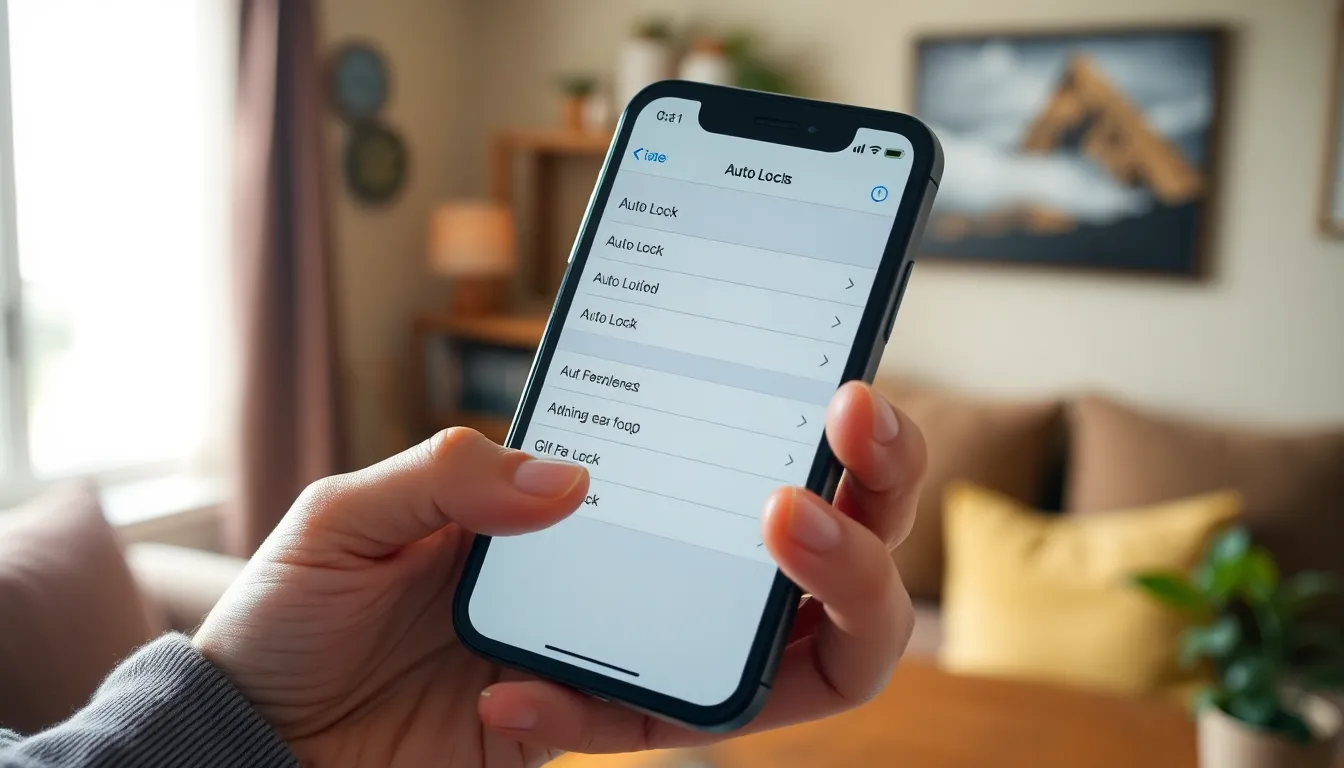
Several methods exist to prevent an iPhone from locking unexpectedly, enhancing user experience during numerous activities.
Adjusting Auto-Lock Time
Adjusting the Auto-Lock time allows users to extend or reduce the duration before the iPhone locks automatically. Navigate to Settings, then Display & Brightness, followed by Auto-Lock to select preferred time settings. Options include 30 seconds, 1 minute, 2 minutes, 3 minutes, 5 minutes, and Never. Choosing a longer duration, like 5 minutes or Never, is ideal during tasks requiring sustained interaction, as it reduces interruptions while maintaining device security appropriately.
Turning Off Auto-Lock Completely
Turning off Auto-Lock completely provides uninterrupted access to the iPhone. Access the same settings as before and select Never in the Auto-Lock menu. This choice keeps the screen on continuously until the user manually locks it. While useful for activities like presentations, users should remain aware of potential battery drain risks. Periodic checks on battery levels can ensure optimal performance during extended use.
Using Guided Access Feature
Using the Guided Access feature offers a tailored way to control iPhone functionality during specific tasks. To enable it, navigate to Settings, select Accessibility, then Guided Access. Once activated, triple-click the side button to start a session. This method prevents the device from locking and restricts access to other applications or settings. Guided Access helps focus on singular tasks, proving beneficial during games, reading, or any activity requiring full attention on the screen.
Preventing Lock Screen in Specific Apps
Certain apps, like streaming and navigation, often require uninterrupted use. Users can adjust specific settings within these applications to prevent the iPhone from locking.
Settings for Streaming Apps
Streaming apps like Netflix and YouTube may automatically lock the screen if inactive for a short time. To prevent this, users can enable a specific setting within each app. Most streaming platforms offer a “Keep Screen Awake” option, which users can activate in the app’s settings menu. This feature keeps the display active during viewing sessions, ensuring no interruptions. Users should also adjust their iPhone’s Auto-Lock settings to a longer duration or set it to Never to maintain non-stop entertainment.
Settings for Navigation Apps
Navigation apps like Google Maps and Apple Maps require constant screen activity for real-time directions. Users can modify settings to keep the screen active while driving. Within the app, there’s often a “Screen Timeout” option that allows users to extend the active session. It’s crucial to connect the iPhone to a power source, as prolonged usage may drain the battery quickly. In addition to app settings, users should ensure Auto-Lock is set to a longer duration or disabled altogether, ensuring navigation remains fluid without interruptions.
Additional Tips for Extended Usability
Adjusting settings can enhance the usability of an iPhone and prevent unexpected locking. Here are some methods to consider.
Reducing Battery Drain
Battery life often becomes a concern when extending screen time. Users can enable Low Power Mode through Settings, which reduces background activity and conserves energy. Alternatively, turning down screen brightness or using Auto-Brightness helps save power. Additionally, closing unused apps running in the background minimizes energy consumption, allowing for longer usage without locking. Keeping the iPhone connected to a charger during extended use further aids in mitigating battery drain, ensuring the device remains powered throughout activities like gaming or streaming.
Keeping Your Screen Active During Use
Users can keep the screen active during specific applications to enhance their experience. Many streaming apps, such as Netflix, offer a “Keep Screen Awake” setting in their respective menus. Enabling this option prevents interruptions while enjoying content. For navigation apps, adjusting the “Screen Timeout” settings offers a solution to maintain visibility while driving. Integrating these practices creates an uninterrupted user experience, allowing seamless interaction without unnecessary distractions from the lock screen.
Adjusting the Auto-Lock settings on an iPhone can significantly enhance the user experience. By selecting longer durations or disabling it completely, users can enjoy uninterrupted interaction with their favorite apps. Utilizing features like Guided Access and keeping the device connected to a power source further ensures a seamless experience, especially during activities that demand full attention.
Implementing these strategies not only prevents the frustration of unexpected locking but also balances usability with battery management. With the right settings in place, users can engage more fully in their tasks without worrying about interruptions.


